
Last Updated: June 19, 2026
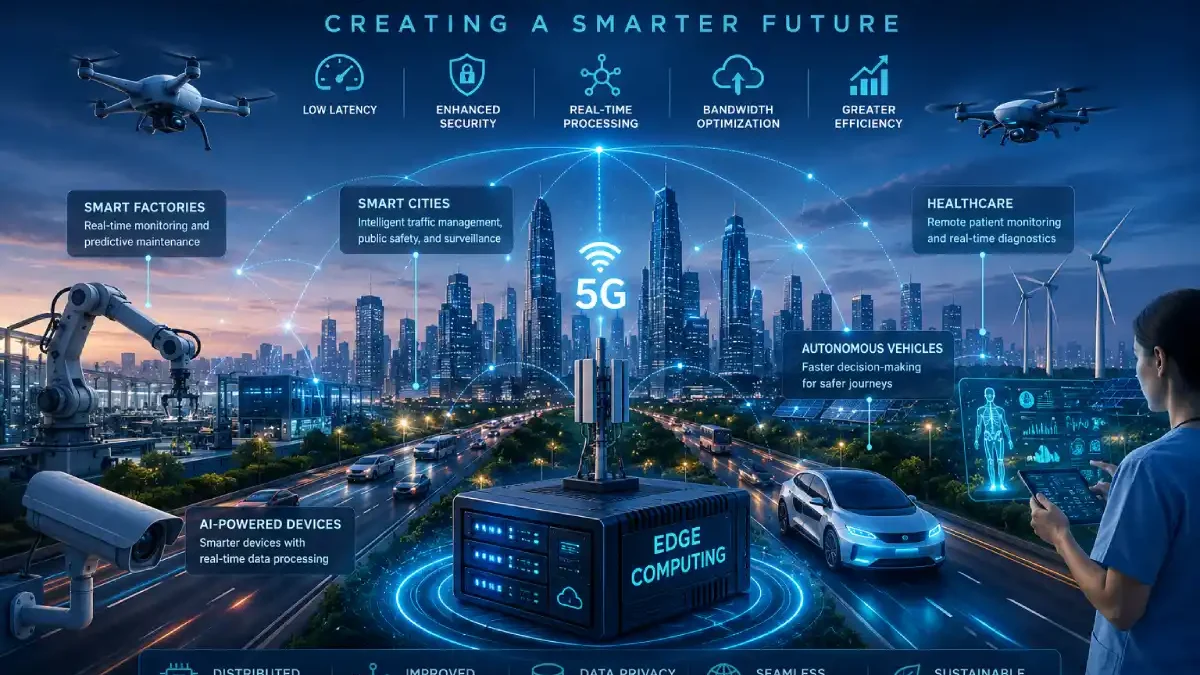
This tiny shift is upending how current digital systems think, act and scale. When businesses off-load every data point onto faraway, centralized clouds, edge computing moves the “brains” close to where it’s produced. That results in speed, immediacy, privacy, better decisions and machines that make decisions as events unfold.
Technologies now embedded with more IoT capabilities, like smart factories and the robots, cars and phones, and of course, the promise of 5G, will only become more pervasive – and more critically, that necessitates edge technology, not as a sophisticated novelty but an economic imperative.
This kind of innovation is no longer about hardware being faster, but about how this data will travel across businesses, entire cities, hospitals, telecom infrastructure, and homes everywhere. Essentially, edge computing is making technology more proactive and smarter.
Table of Contents
What Makes Edge Computing an Innovation?
But what’s so innovative about edge computing? It addresses a major challenge in the digital landscape: data is growing faster than our traditional IT infrastructure can process it. And while cloud solutions are potent, they’re not the best solution for all challenges.
Because some data is best processed instantaneously.
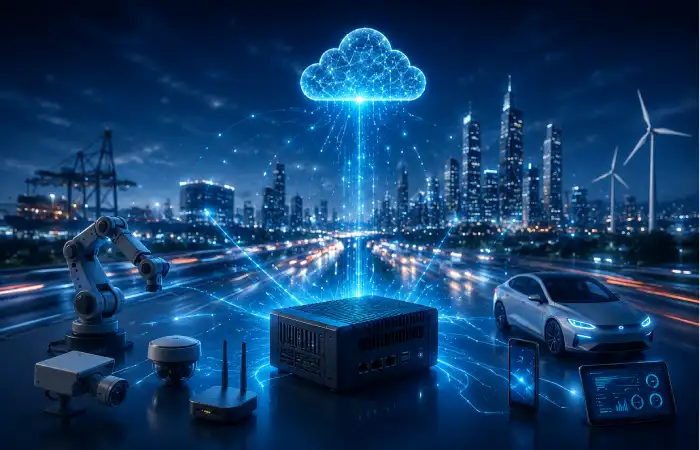
Some applications can’t tolerate latency. Some devices work best with localized decision-making, rather than depending on a central server. And that’s the gap edge computing bridges. In essence, it brings the computing capacity closer to the data itself – which can be sensors, cameras, mobile devices, smart machines, or a local gateway device.
This allows for a faster and more resilient infrastructure.
It helps to decrease the amount of traffic the network needs to carry and limits the bandwidth used as raw data doesn’t have to travel to the cloud before being acted on. This is particularly important for devices operating in environments in which milliseconds can be life-changing. Consider a self-driving car, smart factory, remote health monitoring devices, or smart city devices – delay there could be risky or costly.
How Edge Computing Works
Edge computing is a method of bringing the process, storage, analysis closer to the network itself, rather than having everything in a data center somewhere. It reduces the data it sends back to the center, and the need for the center to analyze every little piece of information, and instead enables processing at the point of source itself.
Here is the basic flow:
| Step | What Happens | Why It Matters |
| Data is generated | A sensor, camera, device, or machine creates data | This is the starting point of the system |
| Local processing begins | An edge device or gateway handles basic analysis | Reduces delay and saves bandwidth |
| Smart decisions are made | The system responds instantly when needed | Critical for automation and safety |
| Important data is sent to cloud | Only useful or summarized data moves upward | Improves efficiency and lowers cost |
| Cloud stores and trains | Long-term storage, AI training, and reporting happen centrally | Supports deeper analytics and scaling |
A good edge system does not replace the cloud. This will integrate with the cloud. Cloud provides storage and complex processing, whereas the edge deals with processing.
This team-up is what makes the Edge the force it is.
Edge Computing vs Cloud Computing
Too many folks frame it as edge vs. Cloud – like one side is the winner and the other is the loser. But really, they solve different problems. The strongest architectures are a combination of the two.
| Feature | Edge Computing | Cloud Computing |
| Processing location | Near the device or data source | Centralized remote servers |
| Speed | Very fast, low latency | Slower if data must travel far |
| Bandwidth usage | Lower | Higher |
| Real-time response | Excellent | Limited by network delay |
| Scalability | Good for distributed systems | Excellent for massive centralized workloads |
| Data privacy | Better for sensitive local processing | Depends on cloud security setup |
| Best for | IoT, robotics, 5G, automation, smart devices | Big data storage, enterprise apps, AI training |
Where edge computing shines is its latency benefits, however. Where cloud computing is a champion for the deepest storage, edge computing delivers more when you need to reduce the latency inherent in cloud’s more distributed nature. This makes it logical why many companies these days are leveraging a hybrid edge cloud.
By handling tasks more immediately via the edge, businesses only send a small fraction of data on the road to the cloud.
This hybrid approach is considered one of the decade’s key innovation advancements.
Best Edge Computing Use Cases
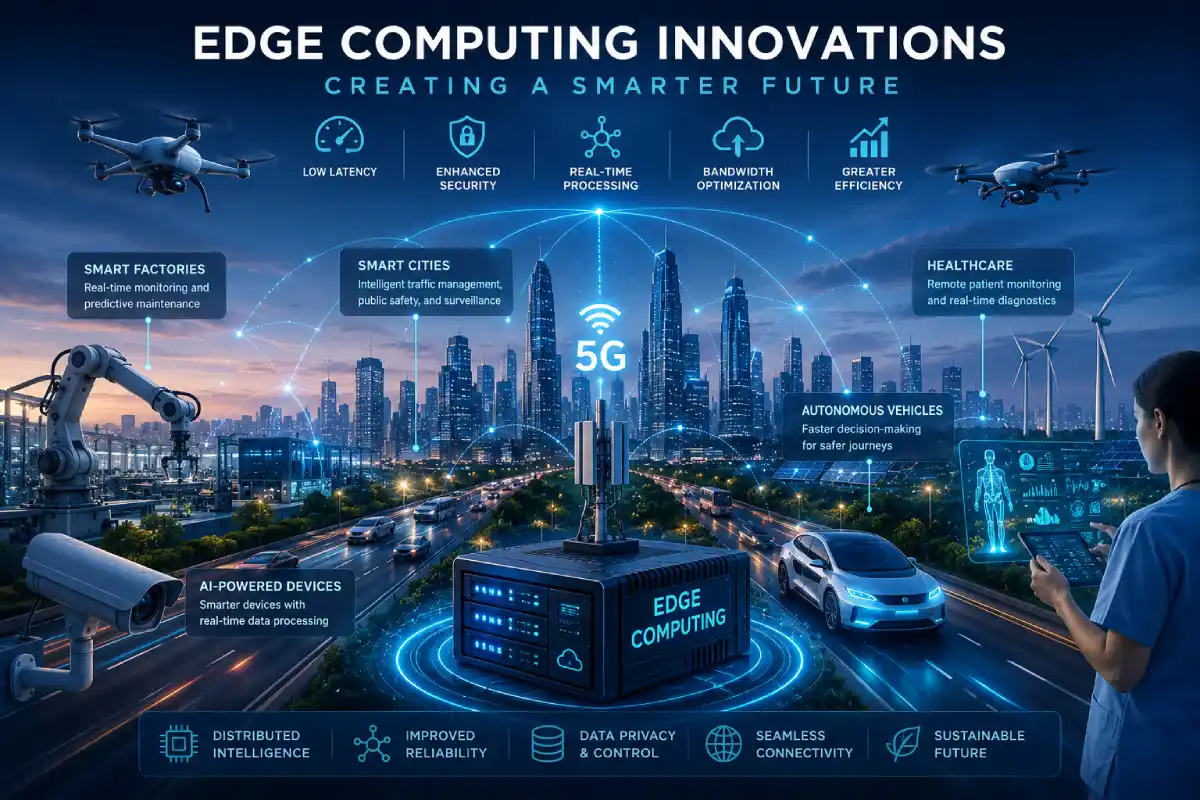
Edge computing has already moved beyond just theory. You’ll be seeing it deployed across various industries whenever responsiveness, agility and on-site processing were considered necessary for decision-making.
| Use Case | How Edge Helps | Real-World Benefit |
| Smart factories | Machines analyze performance locally | Faster maintenance and fewer shutdowns |
| Healthcare monitoring | Patient data is processed instantly | Better response in critical situations |
| Autonomous vehicles | Cars make local driving decisions | Safer navigation and quicker reactions |
| Smart cities | Traffic lights and cameras respond in real time | Reduced congestion and improved public safety |
| Retail analytics | Stores track inventory and foot traffic locally | Better customer experience and faster stock control |
| Agriculture | Field sensors analyze soil and weather on-site | Smarter irrigation and improved crop planning |
| Energy systems | Power grids react to demand changes locally | Greater stability and reduced waste |
| Security systems | Cameras perceive threats on the edge | quicker alerting, robust monitoring response |
All these illustrate the same thing; edge computing thrives where real time decisions must continuously be made.
Edge Computing for 5G Networks
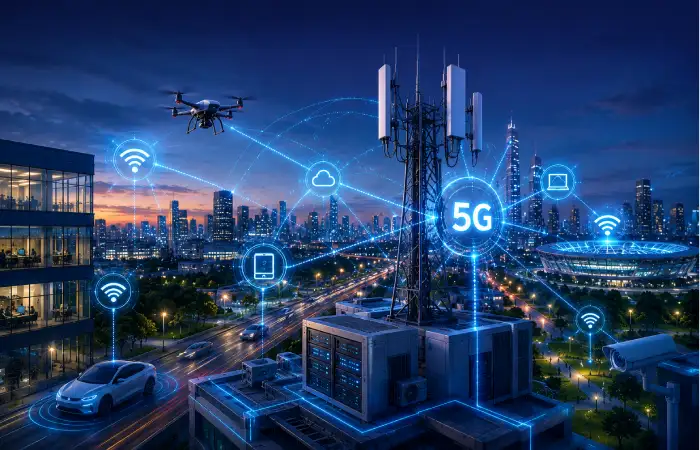
5G and edge computing are a natural match. 5G will deliver wireless internet speed-the faster the speed of wireless communication will allow data to communicate quickly with servers. However, no matter how quick the speed is, there is the need for data to reach the remote server thus high latency would be a cause of the issues.
Edge computing will address the issue. By distributing some of the compute nodes to be as close as the 5G network infrastructure, the response speed for smart devices like, sensors or mobile application or the smart sensor will greatly be reduced.
Why Edge and 5G Work So Well Together
- 5G creates high-speed connectivity.
- Edge computing removes unnecessary travel time for data.
- Together, they support real-time digital services.
- They make advanced applications more practical at scale.
This combination is especially important for:
- Connected vehicles
- Augmented reality and virtual reality
- Industrial automation
- Remote surgery support
- Smart manufacturing
- Live video analytics
- Dense IoT environments
Some 5G applications wouldn’t really work in practice, however, if not for edge computing. But with the added compute functionality, it unlocks its full potential for time-sensitive applications.
So naturally telecom companies, known for spending billions to build their infrastructure, are investing in multi-access edge computing – commonly referred to as MEC. The technology pushes computing capabilities nearer to end-users enabling apps to have low-latency, highly reliable experience.
Why Businesses Are Investing in Edge Computing
Companies aren’t running out to do edge computing because it sounds trendy; They’re doing it because it solves problems.
Main reasons include:
- Faster response times
- Lower bandwidth costs
- Better privacy and local control
- Reduced dependency on constant cloud access
- Improved reliability in remote areas
- Smarter automation at the device level
For companies with thousands of devices, sending every signal to the cloud becomes expensive and inefficient. Edge computing reduces that load. It can also improve uptime, which is a major advantage in manufacturing, logistics, energy, and healthcare.
There is also a strategic benefit. Businesses that process data faster can make better decisions faster. In competitive industries, that matters.
Future of Edge Computing
The future of edge computing looks strong because the number of connected devices keeps growing. More devices create more data. More data creates more pressure on networks. And that makes local processing even more valuable.
Here are some of the biggest directions edge computing is moving toward:
| Future Trend | What It Means | Why It Matters |
| Edge AI | AI models run directly on edge devices | Enables faster and smarter local decisions |
| Distributed intelligence | Multiple edge nodes work together | Improves resilience and scalability |
| Smaller hardware | More powerful chips in compact devices | Makes edge deployment easier and cheaper |
| Private edge networks | Companies run secure local systems | Better for regulated industries |
| 5G integration | Edge becomes part of telecom infrastructure | Supports advanced real-time services |
| Autonomous systems | Machines make decisions with less human input | Boosts automation and efficiency |
| Sustainable computing | Less data travel means lower energy use | Helps reduce digital overhead |
The rise of edge AI is particularly tantalizing-Artificial intelligence models are increasingly running on the edge device, rather than always the cloud. Which leads the charge to real-time image recognition, smart maintenance, speech processing, object identification, real-time suggestions and much more.
The future is not cloud-only. It is distributed. And edge computing will be a major part of that shift.
Advantages and Challenges of Edge Computing
Every technology has benefits, and every one has drawbacks, and the same goes for edge computing. Knowing both sides, however, offers a better sense of where they’re most valuable.
| Advantages | Challenges |
| Very low latency | More devices to manage |
| Better real-time performance | Security becomes more distributed |
| Lower bandwidth use | Setup can be complex |
| Greater privacy control | Hardware cost can rise |
| Works well in remote locations | Multi-node maintenance might be more difficult |
The issues are real but manageable. Why many are going with the path toward centralized management tools, secure orchestration platforms, and automated monitoring of the edge environment is clear.
A Practical View of Edge Computing Innovations
The most important edge computing innovation is not one single device, platform, or chip. It is the architecture itself.
Technology is moving away from a fully centralized model toward a more flexible, distributed model. That shift supports:
- Faster services
- Smarter devices
- Better customer experiences
- More reliable operations
- Real-time business intelligence
But perhaps, in most respects, edge computing makes digital technology feel a bit more human – that there isn’t a delay. When systems can respond to the moment, as an individual colleague who’s on the scene would.
That is powerful.
Final Thoughts
Edge computing thus contributes to the more balanced digital world we’re moving toward. Edge computing, as it becomes a more prevalent fixture with more IoT devices and a wider roll-out of 5G that makes remote data access nearly instant, will eventually become more than just the province of tech nerds and the forward-thinking. It’s an approach that businesses that have yet to adopt the edge will want to make sure they grasp – the next evolution of digital ecosystems that, for all intents and purposes, no longer can wait on the cloud.