
Last Updated: September 23, 2026
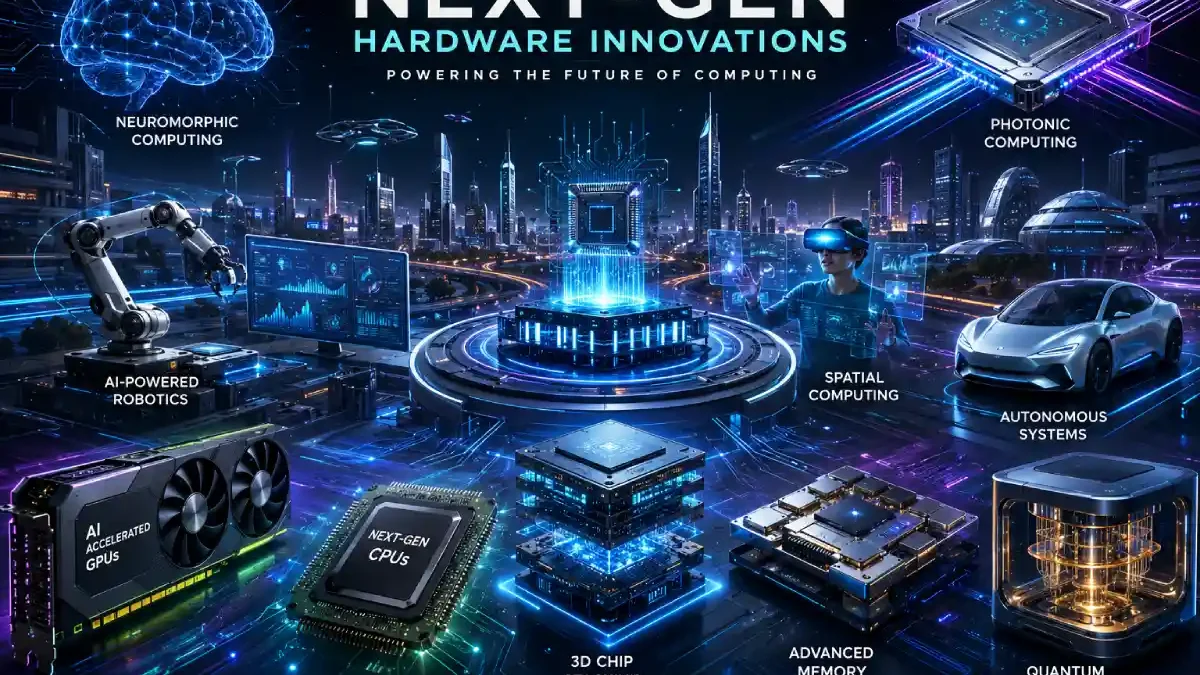
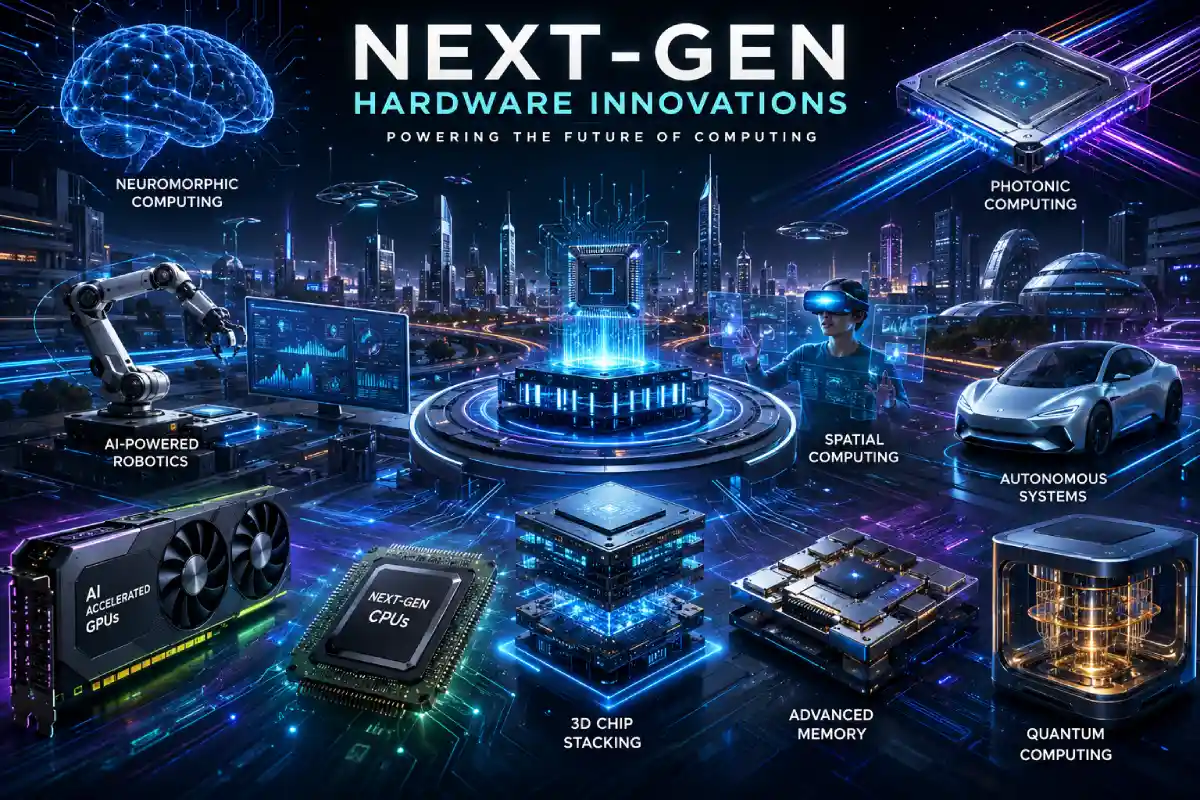
Computers today are advancing at an unprecedented rate. Innovations are pushing next-gen hardware to new limits with artificial intelligence, quantum-inspired computing, super-powered, power-stingy chips, and computing systems built with entirely new design concepts. Silicon’s physical limits have been reached, inspiring engineers and scientists to create totally new technologies.
This article belongs to Emerging Technology
Here are a few developments the technology and manufacturing sectors will be working on over the next five years.
The push for better chips isn’t about simply increasing speed. It’s now driven by a need to build computers for AI, advanced data-centers, autonomous vehicles, virtual realities and advanced scientific simulations. Researchers and companies are in a race to develop chip designs that feature capabilities that imitate the way the human brain works using neuromorphic processing, or can use light instead of electricity to calculate and process data using photonics chips. Let’s take a tour through some of the biggest trends in new computing hardware, identify the coolest technologies and compare emerging solutions.
What kind of devices will next-generation hardware make possible?
Table of Contents
Latest Computer Hardware Trends
Demand from AI, Cloud, Gaming, Data Centers, Edge, and Other Application Verticals is Creating Hardware Disruption.
Key Hardware Trends in 2026
| Trend | Purpose | Major Benefit |
| AI Accelerators | AI processing | Faster machine learning |
| Chiplet Architecture | Modular processor design | Better scalability |
| Neuromorphic Chips | Brain-inspired computing | Low power AI |
| Photonic Processors | Light-based computation | Ultra-fast processing |
| 3D Chip Stacking | Vertical chip integration | Improved performance |
| Edge AI Hardware | Local AI execution | Reduced latency |
| Advanced GPUs | Parallel processing | Enhanced graphics & AI |
| Quantum-Assisted Hardware | Complex calculations | Scientific computing |
These technologies are helping organizations process massive datasets while reducing energy consumption.
Why Hardware Innovation Matters
Modern applications require immense computational power.
Examples include:
-
- Generative AI systems
- Autonomous vehicles
- Smart manufacturing
- Medical imaging
- Scientific simulations
- Cybersecurity analytics
- Real-time language processing
Traditional hardware alone cannot efficiently support these growing requirements.
Neuromorphic Computing Explained
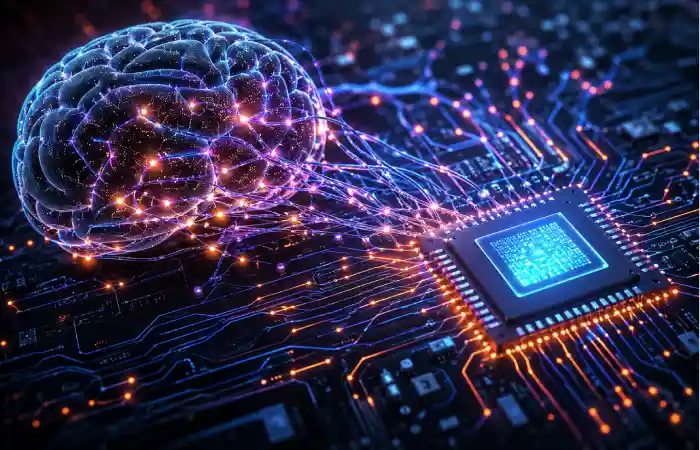
Modern computing offers a technology that’s generating significant buzz in the industry: neuromorphic computing. The NIST research on neuromorphic computing explores brain-inspired computing architectures and their potential for efficient information processing. Neuromorphic computing. This technology has set out to replicate the structure and workings of the human brain neuromorphic computing. Traditional computers process information in order, whereas these types of chips utilize artificial neurons and synapses to send messages in the same way our biological brains do.
How Neuromorphic Computing Works
Traditional computing follows:
Input → Processor → Output
Neuromorphic computing follows:
Artificial Neurons → Synaptic Connections → Learning Response
This architecture allows systems to:
-
- Learn continuously
- Process information in parallel
- Adapt to changing environments
- Consume very little energy
Features of Neuromorphic Chips
| Feature | Traditional CPU | Neuromorphic Chip |
| Processing Style | Sequential | Parallel |
| Energy Consumption | High | Extremely Low |
| Learning Ability | Software-Based | Hardware-Based |
| Adaptability | Limited | High |
| Real-Time Decision Making | Moderate | Excellent |
Applications of Neuromorphic Computing
Robotics
Robots can react naturally to environmental changes.
Autonomous Vehicles
Real-time object recognition becomes more efficient.
Healthcare
Medical devices can continuously learn from patient data.
Smart Sensors
IoT devices become more intelligent while consuming less power.
Security Systems
Threat detection becomes faster and more adaptive.
Benefits of Neuromorphic Systems
-
- Ultra-low power consumption
- Faster AI inference
- Continuous learning capabilities
- Real-time decision making
- Better pattern recognition
Neuromorphic hardware could eventually become the foundation of future artificial intelligence systems.
Photonic Computing Innovations
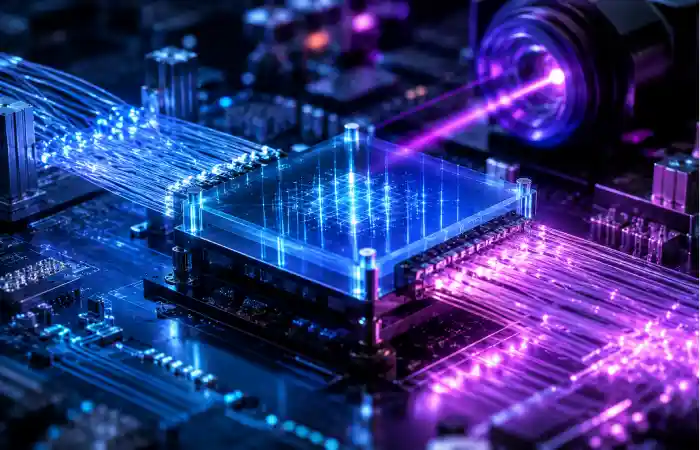
Another revolutionary field is that of photonic computing, technology that relies on the use of light particles, photons, rather than electronics to process data. Our modern computer’s operate with electrons as they travel along a circuits but photonic computers utilize photonic chips so data travel much faster.
What Is Photonic Computing?
The system uses optical signals to swap information with existing electronic systems. Photonic processors can process certain data much faster than traditional processors and do not require so many electrons (heat) to communicate this information, since light travels much faster than electric signals.
Photonic vs Electronic Computing
| Feature | Electronic Computing | Photonic Computing |
| Data Carrier | Electrons | Photons |
| Speed | High | Extremely High |
| Heat Generation | Significant | Minimal |
| Power Consumption | Moderate to High | Low |
| Data Transfer | Limited | Massive Bandwidth |
| Scalability | Moderate | Excellent |
Why Photonic Processors Matter
The sheer size of AI models means that data shuttling between memory and processor is an enormous performance drag.
Photonic systems help solve this challenge by offering:
-
- Faster data transmission
- Lower latency
- Improved efficiency
- Better scalability
Emerging Photonic Applications
AI Training
Large language models require enormous computational resources.
Data Centers
Optical processing can reduce energy consumption significantly.
Scientific Research
Advanced simulations become faster and more efficient.
Telecommunications
Next-generation networking benefits from light-speed data transmission.
Challenges Facing Photonic Computing
Despite its potential, photonic computing faces several obstacles:
| Challenge | Impact |
| Manufacturing Complexity | Higher production cost |
| Integration Issues | Difficult with existing systems |
| Software Support | Limited ecosystem |
| Infrastructure Requirements | New development needed |
But progress toward bypassing these obstacles is swift among researchers.
Best Next-Gen CPUs and GPUs
Processors The engine is always the beating heart.
It’s hard to conceive of a world of modern computers – that of high-end AI, cloud infrastructure, advanced games or scientific workloads – where the chip does not form the basis for the future.
Evolution of Modern CPUs
Today’s processors feature:
-
- More cores
- Larger cache memory
- AI acceleration engines
- Better energy efficiency
- Advanced manufacturing processes
Next-Generation CPU Features
| Feature | Benefit |
| AI Processing Units | Faster AI workloads |
| Chiplet Design | Improved scalability |
| Hybrid Cores | Better efficiency |
| 3D Cache | Enhanced performance |
| Advanced Fabrication Nodes | Lower power usage |
Evolution of GPUs
Graphics processors are no longer limited to gaming.
Modern GPUs power:
-
- AI model training
- Data analytics
- Video rendering
- Scientific simulations
- Cloud computing
CPU vs GPU Comparison
| Specification | CPU | GPU |
| Core Count | Low to Moderate | Extremely High |
| Parallel Processing | Limited | Excellent |
| AI Performance | Good | Outstanding |
| Gaming | Good | Excellent |
| Scientific Computing | Moderate | Excellent |
| Energy Efficiency | High | Moderate |
Key Innovations in Modern GPUs
AI Tensor Cores
Designed specifically for machine learning operations.
Ray Tracing Hardware
Creates realistic lighting and reflections.
High-Bandwidth Memory
Accelerates data-intensive workloads.
Multi-GPU Scaling
Allows massive computational expansion.
Future Computing Devices
The next decade may completely redefine personal and enterprise computing.
These developments are also closely connected to the broader future of smart technology in 2025, where AI, connected devices, automation, and advanced hardware are converging to reshape everyday computing.
Future devices will be more intelligent, connected, and efficient than anything available today.
Emerging Future Computing Technologies
| Technology | Expected Impact |
| Brain-Computer Interfaces | Direct human-machine communication |
| Quantum-Assisted Systems | Solving complex problems |
| AI PCs | Personalized computing |
| Wearable Computing | Always-connected experiences |
| Spatial Computing Devices | Immersive digital interaction |
| Smart Edge Devices | Real-time local intelligence |
AI-Powered Personal Computers
Future PCs will include dedicated AI processors capable of:
-
- Real-time translation
- Intelligent automation
- Personalized recommendations
- Advanced content creation
- Enhanced cybersecurity
AI PCs will likely become the standard computing platform for both businesses and consumers.
Brain-Computer Interfaces
Brain-computer interface BCIs are systems that let human brains communicate directly with computers or machines.
Potential applications include:
-
- Medical rehabilitation
- Prosthetic control
- Enhanced accessibility
- Human augmentation
- Advanced gaming experiences
Although still developing, BCIs represent one of the most ambitious areas of future hardware innovation.
Spatial Computing Devices
Spatial computing combines:
-
- Artificial intelligence
- Augmented reality
- Virtual reality
- Advanced sensors
This tech creates the perfect blend of virtual and real-world interaction within the environment.
Applications include:
-
- Education
- Healthcare
- Engineering
- Entertainment
- Industrial training
Future Hardware Characteristics
The next generation of computing devices will likely focus on:
| Characteristic | Importance |
| Intelligence | AI-driven operation |
| Energy Efficiency | Sustainable computing |
| Connectivity | Seamless communication |
| Adaptability | Continuous learning |
| Miniaturization | Smaller devices |
| Security | Built-in protection |
Comparing Major Next-Gen Hardware Technologies
| Technology | Speed | Power Efficiency | AI Capability | Future Potential |
| Traditional CPUs | High | Good | Moderate | High |
| Advanced GPUs | Very High | Moderate | Excellent | Very High |
| Neuromorphic Chips | High | Excellent | Outstanding | Extremely High |
| Photonic Processors | Exceptional | Excellent | High | Extremely High |
| Quantum-Assisted Systems | Revolutionary | Moderate | High | Transformational |
Building the Hardware Ecosystem of Tomorrow
The innovation in hardware will no longer be about just faster CPUs. The systems of the future will embrace intelligence, efficiency and scalability.
Key developments shaping tomorrow’s computing landscape include:
-
- Brain-inspired neuromorphic architectures
- Light-based photonic processors
- AI-optimized CPUs and GPUs
- Quantum-assisted computation
- Spatial computing platforms
- Intelligent edge devices
Combined, the trio of technologies promise breakthroughs for healthcare, transport, education, manufacturing, entertainment, and science research
Conclusion
The next wave of hardware improvements promises a new era of computing: With legacy hardware at its zenith, neuromorphic computing, photonics computing, new CPUs and GPUs, and devices with intelligent computing power could revolutionize the computer at the system level in the years to come.
Computers will soon “think” and act more like humans; they will process information as quickly as the speed of light, consume less power dramatically, and weave themselves into the very fabric of our lives. Those who take the time to become familiar with the future hardware will be positioned to capitalize on the wealth of new hardware possibilities.